A landmark 11-country deal that will slash tariffs across much of the Asia-Pacific will come into force at the end of December after Australia became the sixth country to ratify the agreement, four days after Canada formally approved it.
Australia announced Wednesday it had completed procedures needed for the Comprehensive and Progressive Agreement for Trans-Pacific Partnership (CPTPP) to progress. It will take effect Dec. 30.
“This triggers the 60-day countdown to entry into force of the agreement and the first round of tariff cuts,” said New Zealand Trade and Export Growth Minister David Parker. His country is responsible for official tasks such as receiving and circulating notifications made by members of the pact.
The other four countries that have ratified the agreement are Japan, Mexico, New Zealand and Singapore.
The original 12-member deal was thrown into limbo early last year when President Donald Trump withdrew to prioritize protecting U.S. jobs.
The remaining countries, led by Japan, finalized a revised trade pact in January.
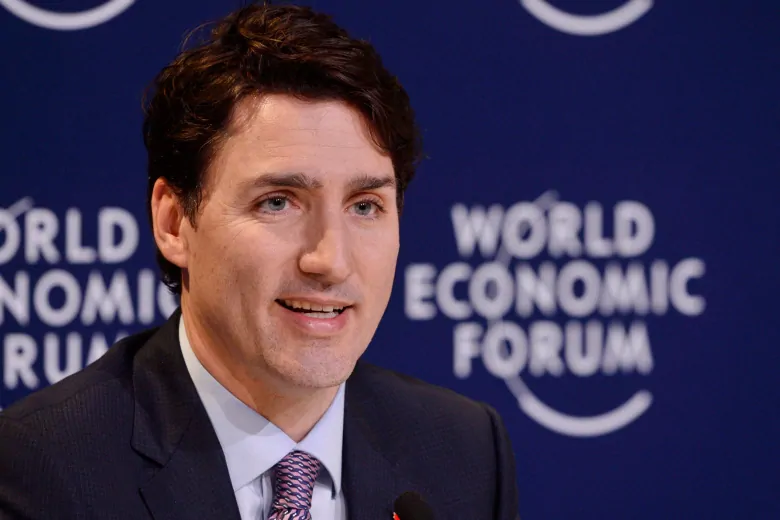
Prime Minister Justin Trudeau wrangled for additional changes to the revamped deal, and several weeks later announced Canada would sign on while at the World Economic Forum in Davos late last month. (Paul Chiasson/The Canadian Press)
The deal will reduce tariffs in economies that together amount to more than 13 per cent of global gross domestic product — a total of $10 trillion US. With the United States, it would have represented 40 per cent.
“As protectionist moves strengthen across the world, the importance of free and fair rules is growing more and more,” Japanese Economy Minister Toshimitsu Motegi told a news conference in Tokyo.
He added that Japan would continue be “a flag-bearer for free trade.”
Members hope U.S. will rejoin pact
The success of the deal has been touted by officials in Japan and other member countries as an antidote to counter growing U.S. protectionism. They hope that Washington would eventually recommit to the pact.
Trump’s economic agenda, however, remains focused on China as a trade war between the world’s two largest economies shows little sign of abating.
Trump on Tuesday warned he is ready to impose additional tariffs on Chinese goods if an agreement with Beijing could not be reached.
The United States has already imposed tariffs on $250 billion worth of Chinese goods, and China has responded with retaliatory duties on $110 billion worth of U.S. goods.
The trade war threatens to check global economic growth, though signatories to CPTPP said the deal would be a boon for several sectors.
Australia said the agreement will boost agricultural exports, set to be worth more than $36.91 billion this year despite a crippling drought.
The five member countries still to ratify the deal are Brunei, Chile, Malaysia, Peru and Vietnam.
While most of the remaining parties to the agreement have vowed to ratify the deal, Malaysian Prime Minister Mahathir Mohamad said he was still weighing its benefits.
Peru’s Deputy Trade Minister Edgar Vasquez told Reuters he expects Lima will ratify the agreement before 2019.
“One of the countries that will benefit the most is Peru.”