A study commissioned by McMurray Métis implicates Syncrude and various levels of government in the eviction of a Fort McMurray Indigenous settlement.
Syncrude has previously denied any involvement in the removal of residents from the area known as Moccasin Flats in Fort McMurray’s lower townsite 40 years ago.
In interviews with CBC News, the oil company instead blamed the municipality for carrying out the eviction.
But the study, to be released Thursday by the McMurray Métis, suggests both the oil company and the municipality played a key role in the forced removal of a Métis and First Nations settlement that existed along the banks of the Athabasca and Snye rivers.
CBC obtained an advance copy of the report, entitled The Moccasin Flats Evictions: Métis Home, Forced Relocation, and Resilience in Fort McMurray, Alberta,
Researcher Hereward Longley said documents suggest a Syncrude-owned development company worked with the town of Fort McMurray on the evictions.
But he cautioned the research does not definitively show Syncrude directly worked to evict the residents, and he noted there are outstanding questions and documents that could determine Syncrude’s full role.
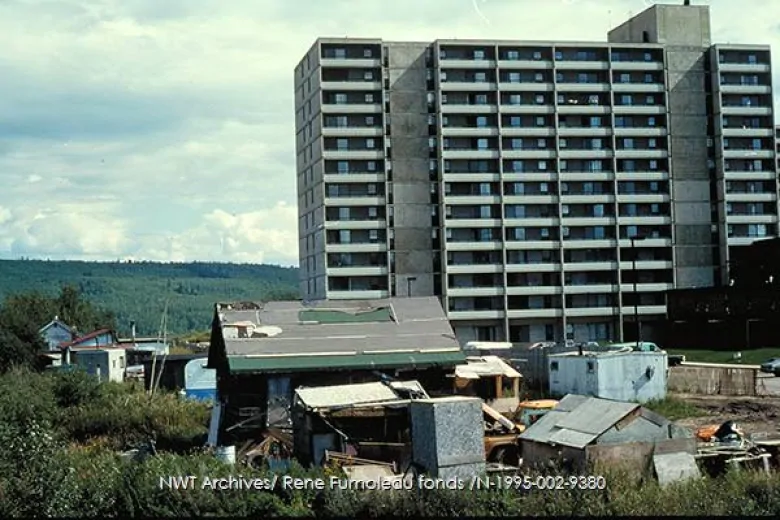
Moccasin Flats was bulldozed to make way for the apartment building in the background. (NWT Archives)
At least 14 Indigenous families were evicted from Moccasin Flats starting in the late 1970s to make way for growth in the rapidly expanding town.
“A lot of the stuff that people have said over the years are actually true,” Bill Loutitt, McMurray Métis CEO, said Wednesday.

Bill Loutitt is an elder and CEO of the McMurray Métis. (David Thurton/ CBC)
The residents were removed to construct several infrastructure projects, including a high-rise building for Syncrude’s oilsands employees.
On Jan. 22, 1979, the town of Fort McMurray demolished area buildings after relocating six families, states a newspaper report Fort McMurray Today. Those families that remained in Moccasin Flats were evicted on May 14,1981.
Letter from province
One of the notable findings in the report is a May 1975 letter from the province, which “reprimanded” Northward Developments — which was wholly-owned by Syncrude —for requesting the evictions.
“It should be understood by all parties involved, that I, as Provincial Minister Responsible for Native Affairs, do not, and will not support any form of forceful eviction, of the inhabitants of the area in and around the Snye River,” wrote Bob Bogle, who was part of Peter Lougheed’s Progressive Conservative government at the time.
The researchers also found a December 1976 draft development agreement between Northward Developments and the Town of Fort McMurray that states a road allowance would be sold to Northward, while the residents of Moccasin Flats would be removed.
The agreement states the town would “assist in the relocation of existing Snye residents” through provincial programs.
Public inquiry called
The study was based on interviews with Métis members who lived through the eviction, archival material and municipal and provincial documents.
Syncrude spokesperson, Leithan Slade, told CBC the company is aware of the report and will work with the McMurray Métis to understand its findings.
Adam Hardiman, a spokesperson for the municipality, said administration looks forward to reading the report’s details and “moving ahead in a spirit of humility and reconciliation.”
In July, the municipality called for a provincial inquiry that would have the authority to subpoena records and people, in order to obtain a complete picture of what happened.
But Loutitt said the McMurray Métis would rather see what he calls “reconcili-action.”
“We don’t believe there should be an inquiry,” Loutitt said. “It takes too long and nothing gets resolved. They talk reconciliation, but, we want to see some action.”
The recommendations for reconciliation outlined in the report include:
- A formal apology
- Compensation for removed families
- A monument and cultural centre to mark the wrong that was done
- Construction of a homeless shelter
- Cultural training for government and industry representatives
Connect with David Thurton, CBC’s Fort McMurray correspondent, on Facebook, Twitter, LinkedIn or email him at david.thurton@cbc.ca