The chief of Canada’s largest Indigenous police force said policing in First Nations communities in northern Ontario is “like driving a car with no brakes.”
Terry Armstrong was a witness at the first day of hearings of the federal inquiry into missing and murdered Indigenous women and girls (MMIWG), taking place in Quebec City this week.
The Nishnawbe-Aski Police Service (NAPS), which serves 34 communities in northern Ontario, has struggled with chronic underfunding for the past two decades, Armstrong told MMIWG commissioners Monday.
“You’re hanging on with your fingernails. It’s not a way to do business, and it’s certainly not safe,” Armstrong said.
Opioid crisis ‘devastating communities’
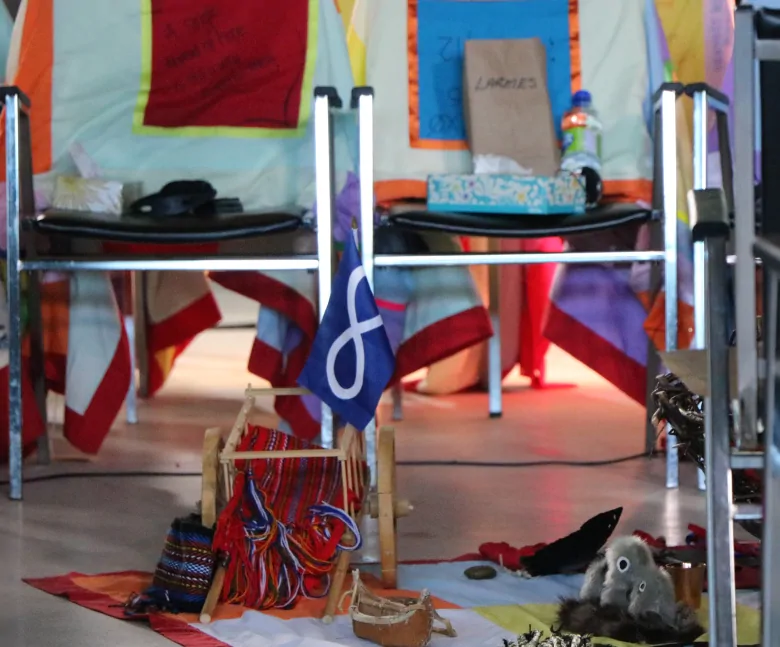
A seat at the sharing circle of the MMIWG inquiry hearing is left empty for the Indigenous men and women who were victims of violence. (Julia Page/CBC)
Underfunding prevents police from doing any preventative work in communities, according to the chairman of the board of NAPS, Mike Metatawabin. He used the catastrophic opioid crisis that’s spreading throughout the region as an example to illustrate his point.
“We’re just putting out fires,” he said.
Metatawabin made an emotional plea to increase services targeting opioid addictions, saying they are having “a very devastating effect on the communities.”
He said it’s important to figure out why so many young people are turning to opioids.
Metatawabin said grandparents in northern Ontario are having to leave their work to take care of grandchildren, because the children’s parents have become addicted.
“We’re losing our young mothers. We need to do something,” he said, deploring the fact that recommendations from inquiries like the MMIWG are non-binding and therefore don’t necessarily bring the change that is needed.
Criminal justice and oversight will be the main topic for Tuesday’s hearings.