Protesters and the Saskatchewan government have a date in court today that could determine the fate of the teepees set up on a lawn in front of the provincial legislature.
As of Thursday, protesters with the Justice For Our Stolen Children Camp have been set up on green space in Regina’s Wascana Centre for more than 150 days. They are pushing for changes to the province’s justice and child welfare system, both of which have high numbers of Indigenous young people.
Protesters and the provincial government have each launched separate court action over the justice camp, with the hearing scheduled for 10 a.m. CST at Regina at the Court of Queen’s Bench.
The camp wants declarations from the court that the protest is protected under the Canadian Charter of Rights and Freedoms and that the arrest of six protesters in June was unconstitutional.
Meanwhile, the provincial government is asking the court to direct the campers to “cease occupying the Land.” It also wants the Regina Police Service to carry out any court orders to have the camp removed.
In June, police arrested six protesters seated inside a teepee at the camp.
That same day, staff with the Provincial Capital Commission dismantled the lone teepee on the site. Three days later, on National Indigenous Peoples Day, a teepee was re-erected. Since then the camp has grown to 15 teepees.
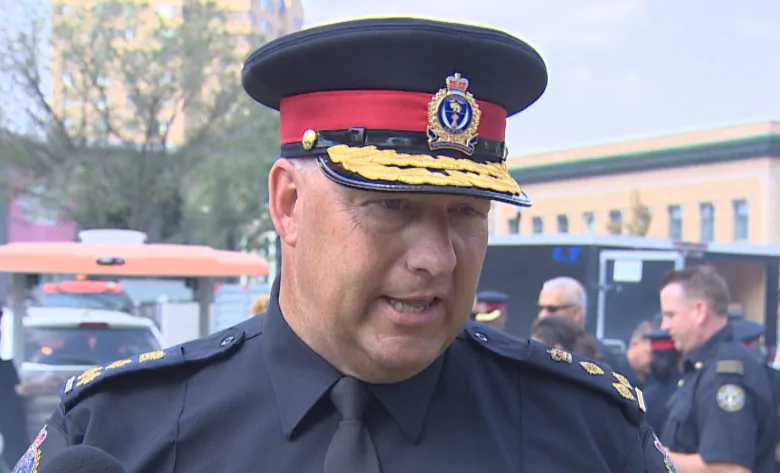
Regina Police Service Chief Evan Bray has said police’s action over the justice camp will depend on what is decided in court. (CBC)
Police will follow court decision
Bray previously told reporters police do not intend to take down the camp unless it starts to pose a threat to public safety.
Since the provincial government applied for a court order, Bray has said the service’s next move will depend on the outcome of the court action.
A Regina Police Service spokesperson said Bray will attend Thursday’s hearing.
Province wants protest camp gone, protesters want camp protected
In a previous statement to CBC News, Minister of Central Services Ken Cheveldayoff — who oversees the Provincial Capital Commission, which operates Wascana Park — said the government respects the group’s right to protest, but that overnight camping, setting up structures and the burning of combustibles is not allowed.
The protestors’ legal counsel has said a judge must decide if the protesters’ right to express themselves outweigh the government’s “interest in lawn maintenance.”