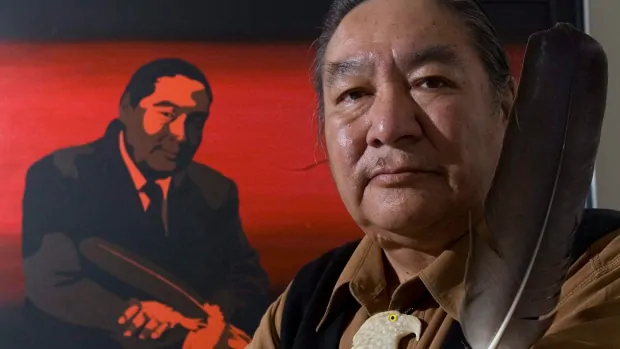
The son of the man who originally called for the establishment of National Indigenous Peoples Day believes Canadians should educate themselves on the first peoples of the land year-round.
“It would be great if we taught the history, not the mainstream society, to educate the newcomers and mainstream society as well. ‘Cause as an Aboriginal Canadian here, I have friends who … don’t actually know very much about it,” said Bruce Harper, son of the late Manitoba politician Elijah Harper.
National Aboriginal Day, as it was originally named, was proclaimed in 1996. It was a year after after the Sacred Assembly, a national conference of Indigenous and non-Indigenous people chaired by Elijah Harper, called for a holiday to celebrate the contributions of Indigenous people.
The day had also been recommended by the Royal Commission of Aboriginal Peoples, and by the National Indian Brotherhood, precursor to the Assembly of First Nations, in 1982.
Elijah Harper rose to national attention in 1990, when, as a member of the Manitoba Legislative Assembly, he quietly voted against the Meech Lake Accord, eagle feather in hand.
His vote effectively blocked the constitutional amendment that was supposed to win Quebec’s acceptance of the Constitution Act of 1982 by preventing Manitoba from approving the accord, which required passage by all 10 provinces and the federal government, before the deadline.
Harper objected to the package because Indigenous people weren’t included in the negotiations and their concerns were not addressed in the act.
Now the younger Harper finds Canadians have a long way to go toward recognizing the contributions and achievements of Indigenous people, he said.
“First of all, we’re the first peoples of this land and we have a lot of history. We’ve had our language, our cultures, our stories and we’ve been here for a long, long time,” he said.
Education would help: son
He also thinks most Canadians hold a lot of misconceptions about Indigenous people.
“Mainstream society says the Aboriginal people are getting handouts from the government, but the treaties and agreements are that we share the revenues of this land. So a lot of the money that is entrusted by the feds to the Aboriginal people comes from the productivity that this land has provided for this country.”
National Indigenous Peoples Day is celebrated every June 21.