An E. coli outbreak in the Edmonton area that has resulted in the death of one person is linked to pork products sold by a central Alberta Hutterite colony, Alberta Health Services said Wednesday.
The Canadian Food Inspection Agency has issued a food recall warning for certain pork products sold and distributed by The Meat Shop at Pine Haven between Feb. 19 and April 24. The range of products includes ground pork, chops and roasts as well as bacon, wieners and organ meats.
The Pine Haven Hutterite colony is 12 kilometres southeast of Wetaskiwin.
The number of lab-confirmed cases of E. coli O157:H7 linked to the outbreak is now at 36, including 11 patients who have needed hospital care and one who died “likely due to infection with E. coli,” AHS said in a news release.
An AHS investigation has found a common link between the lab-confirmed cases and certain raw and ready-to-eat pork products sold and distributed by the business.
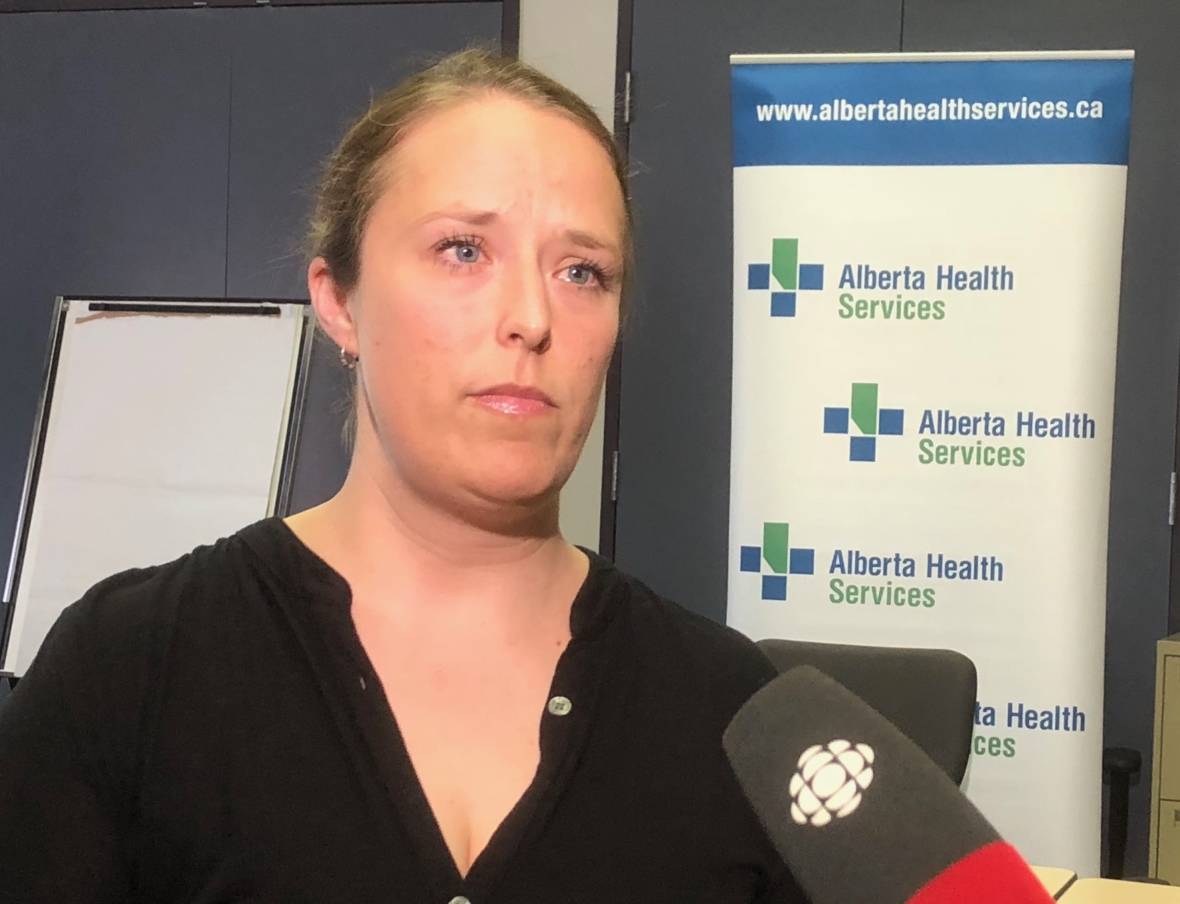
Dr. Jasmine Hasselback, medical officer of health for the Edmonton zone of Alberta Health Services, will update media on the E. coli outbreak Wednesday afternoon. (CBC)
All 36 cases reported so far have been linked to pork sold by the shop, Dr. Jasmine Hasselback, AHS medical officer of health for the Edmonton zone, said at a news conference Wednesday afternoon.
“There has been great co-operation by The Meat Shop at Pine Haven,” Hasselback said. “They have held all potentially contaminated products. So we know that that is not entering any further into public consumption.”
AHS had previously warned that anyone who had eaten at a south Edmonton restaurant called Mama Nita’s Binalot since March 15 should monitor themselves for symptoms of the infection. Several cases of E. coli infection had been linked to food served at the restaurant.
Those cases are also linked to the pork products, Hasselback said.

Mama Nita’s Binalot in southeast Edmonton. (Google Street View)
Tracking down the source of the outbreak involved three principal lines of investigation, she said.
Laboratory tests confirmed that the cases were linked. Officials questioned people who became ill, asking them what and where they ate. The CFIA and Alberta Agriculture then gathered food samples to be tested.
“With all those three, you can start making some linkages,” Hasselback said. “And it was through that that we were able to work backwards and identify this site.”
AHS and the CFIA are encouraging consumers to check if they have recalled products in their homes. Businesses should also verify whether they have any recalled products.
Recalled products should be thrown out or returned to the store where they were purchased. Food contaminated with E. coli O157:H7 may not look or smell spoiled but can still make people sick if eaten.