An Australia-based scientist has documented bottlenose dolphins and false killer whales off northern Vancouver Island for the first time.
Marine ecologist Luke Halpin said his findings, published in the journal Marine Biodiversity Records, highlight the first confirmed sightings in the area of both species, which are usually found in warmer waters.
Halpin said he sighted both species swimming together in a group in July 2017 while he was doing sea bird research off the west coast of the island. He was surprised when he spotted the group.
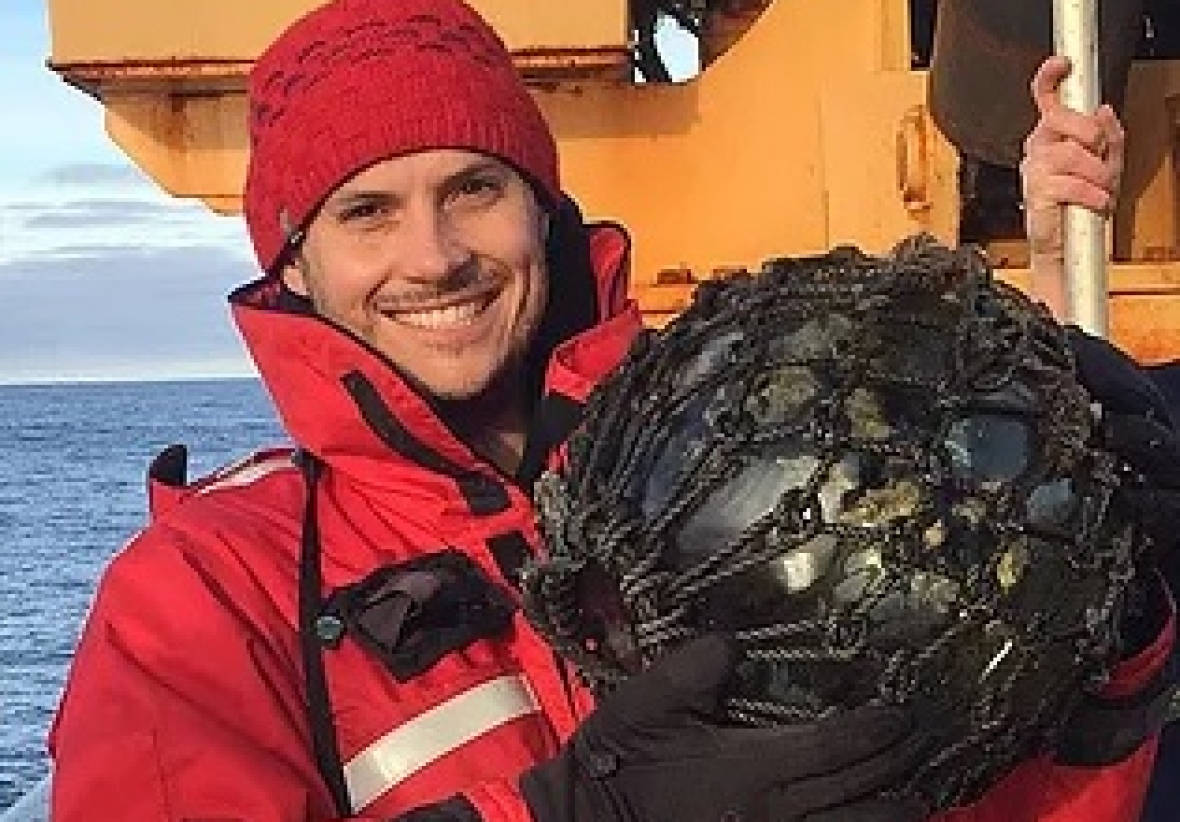
Halpin undertakes ecological research to help conversation and improve environmental stewardship. (Luke Halpin/Halpin Wildlife Research)
At the time, he said to himself: “‘Oh you know it can’t be them, it can’t be them,’ and sort of coming to the realization there are some species we haven’t seen up here before.”
He documented a total of 200 bottlenose dolphins and 70 false killer whales.
False killer whales are a type of dolphin normally found in temperate and tropical waters around the world. Bottlenose dolphins are most commonly found in Florida
In November 2016, a false killer whale calf was rescued from a beach in Tofino, where residents had discovered it undernourished and dehydrated. It was named Chester and lived at the aquarium until its death in November 2017.

Halpin documented 70 false killer whales swimming with a group of 200 bottlenose dolphins off the west coast of Vancouver Island in July 2017. (Luke Halpin)
Halpin, who spoke to CBC News by phone from Australia — where is he a PhD student and runs Halpin Wildlife Research — said the group he saw had likely not become lost but was there on purpose.
“It’s exhilarating to see, in this case, so many individuals and species that, you know, I’ve never seen up there before,” he said.
Halpin said the animals were most likely there due to warming waters caused by climate change.
In 2014, the North Pacific Ocean set record high temperatures — three to four degrees celsius higher than average.
Halpin’s work in Marine Biodiversity Records says that seeing the two species travelling together and interacting is rare and special, and they may now regularly range into British Columbia waters when the water is warm enough.
Our paper released today: First record of common bottlenose <a href=”https://twitter.com/hashtag/dolphin?src=hash&ref_src=twsrc%5Etfw”>#dolphin</a> in Canadian Pacific waters <a href=”https://t.co/xuXcrNecsw”>https://t.co/xuXcrNecsw</a> <a href=”https://twitter.com/hashtag/mbrjournal?src=hash&ref_src=twsrc%5Etfw”>#mbrjournal</a>
—@SeabirdResearch
In the journal Northwestern Naturalist, he also documented sightings of a swordfish and a loggerhead turtle in B.C. waters.
He said it’s important to document the observations to track how changes in the ocean are occurring.
“We need to think about how we live and how these changes are going to affect us in the future because ultimately we really depend on a healthy ocean,” he said. “Our own existence is dependent on the oceans being in a healthy state.”
Other scientists say that unusual or invasive species could harm the health of native species as they compete for food.