Forget the fearsome Drogon and Rhaegal of Game of Thrones fiction — dragons are real and two of them are living in Edmonton.
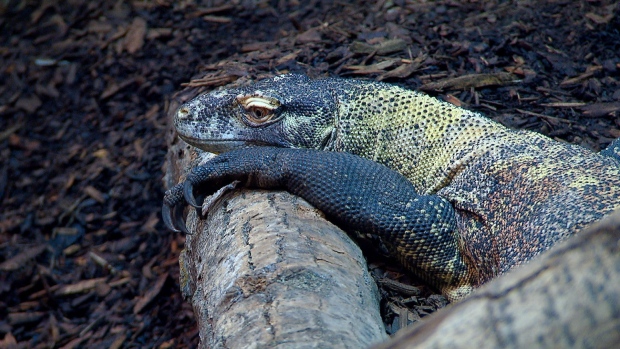
A pair of Komodo dragons has arrived at the Edmonton Valley Zoo. Ophelia and Saphira are on loan from the Calgary Zoo.
They will be in Edmonton until at least October when they will be sent to the Memphis Zoo in Tennessee to meet some potential mates and hopefully hatch a new generation of dragons.
‘A remarkable animal’
One of the two Komodo dragons now living at the Edmonton Valley Zoo. (CBC)
The Komodo dragon, native to just a handful of Indonesian Islands, is the king of all lizards. At three metres in length and often weighing 90 kilograms, they are by far the largest and heaviest of their kind on Earth.
The species is endangered.
“They are quite a remarkable animal,” said Wade Krasnow, animal care team leader at Edmonton’s zoo. “They are very, very large lizards.
“They’re doing really, really well. I went to look at them the other day and they were curled up in a little sisterly ball, sleeping together. It was so, so interesting to see lizards doing that.”
Although they don’t breathe fire like their fictional counterparts, the real-life scavenger beasts are agile hunters, with lashing tails, powerful claws, a forked tongue and a powerful venomous bite. Their saliva contains more than 50 dangerous strains of bacteria.
When they aren’t serving as reptilian vultures feasting on carrion, they catch their prey with an ambush strategy.
They lie waiting for an unsuspecting animal and then sprint into action, ripping open the flesh of their victim before it can escape.
‘Move in and make the kill’
Komodo dragons can run about 20 kilometres per hour over short distances, charging with agility.
“If they hunt bigger animals like deer and water buffalo, they will bite it and it causes an infection,” said Krasnow. “It doesn’t die right away, and they just follow it. They smell the infection.
“They’re always flicking their tongue out to smell the air like a snake, so they follow this animal and once the animal is weak enough, they’ll move in and make the kill.”
At four years old, Ophelia and Saphira now weigh 17 kilograms each and are only half of their eventual size. Most dragons live more than 30 years.
‘Not very many of them left’
They were born in captivity in the United Kingdom, part of an international breeding program intended to help preserve the species. Between 3,000 to 5,000 of the creatures remain in the wild.
“That’s not very many of them left,” said Krasnow. “That’s why zoos across the world are working together to breed them and keep the genetic diversity up.
“Maybe in the future we can release them back into the islands, once there is proper habitat and prey.
“Their prey species are being poached so they have nothing to eat, they’re starving.”
In their zoo habitat, the giants usually bask on the rocks of their tropical enclosure but there’s a chance for Edmontonians to see the Komodos’ reptilian prowess in action.
The zoo will hold carcass feedings every other Sunday at 10:30 a.m., beginning this weekend.
Feeding the lizards raw cuts of meat helps them stay healthy and strong, and it’s entertaining for spectators, Krasnow explained.