RIO DE JANEIRO — The bus was on time. The driver was nowhere to be found. And the volunteer, trying to be helpful, had no idea what to do.
In the simplest of terms, these were the Games of the XXXIst Olympiad as they plod toward conclusion in this city of stark beauty and horrific poverty, an Olympics seemingly held together with tape and glue and barely enough money, a Games of confusion, overreaction, exaggeration and so much sporting magnificence.
A Games that reaches the finish line Sunday night, with green pool water behind it and without major incident; with attacks on media buses but nothing resembling terrorism; with a different robbery story almost every day, much of that happening at venues or along Copacabana Beach; and after the buildup of so much fear and worry, we can all now exhale.
It wasn’t that bad. It wasn’t that great. On the Olympic scale it was somewhere between memorable and forgettable.
The closing ceremony brings the Games to conclusion Sunday night and to be honest, we’re ready to go home. It’s time. This isn’t London of four years ago, which warmed up and built into something. This wasn’t Beijing or Athens, even, or going back to Sydney in 2000, where I never wanted to leave. There is none of that feeling now. Three weeks here has been long enough. There are no frequent bus-riding points for being stuck in Brazilian traffic.
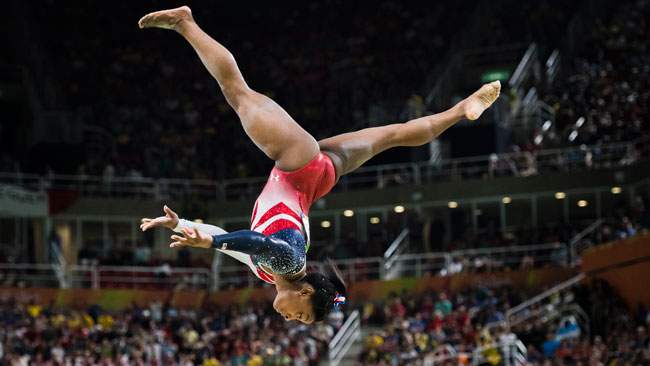
But with all that, what the Olympics seem to prove, over and over again, no matter where it’s held, no matter what the buildup is like, once sport begins the magic of the Games takes over. Whether it was one last time seeing Usain Bolt or the first time seeing Penny Oleksiak. Whether it was being amazed by everything Simone Biles does or being intrigued by the Olympic introduction of Andre De Grasse.

Once the games take over the Games, so much of the rest, even the green pool, seems to fade away.
I watched a women’s volleyball game the other day, a sport I don’t care much about, a semifinal game between the United States and Serbia, two countries that don’t interest me. And I was consumed by it. I couldn’t stop watching. And when Serbia won, the women fell to the floor, hugging and crying and rolling around and hugging and crying some more. And around me, two Brazilians, an Argentine, and a doctor from France all cried.
The power of the Olympics always seems to triumph.
The coach of the American women’s water polo team, Adam Krikorian, left Rio just before the Olympics when his brother suddenly passed away. He returned after the funeral to coach his team to gold. Coaches are not given gold medals when their teams win, but in a scene almost out of the movie Rudy, his team lined up after the medal ceremony and, one by one, each placed their gold medal over the coach’s head.
The power of sport: It pushed other issues to the side. The stadiums were as empty as any have been for decades at a Games. The people of Brazil couldn’t afford the pricing. And even the attempt to pack the venues with free tickets to school children were thwarted by an inept organizing committee.
This is what you can’t see on television: There was supposed to be 70,000 volunteers. But budget cuts brought that number to 56,000. Of the 56,000, less than 40,000 actually showed up to work after getting their clothing and meal vouchers. And as one volunteer told me, “It’s not our fault we don’t know anything. We were never trained for this job.”

Most of the volunteers, like most of the country, only speak Portuguese. Sometimes, that added to the Olympic confusion.
The lack of volunteers meant the drug testing areas at some venues were compromised. One Canadian doctor called it the worst set up he’s seen at an Olympic Games. All this with the backdrop of the Russian doping scandal ever present and for the first time in memory clean athletes were outspoken and vigilant about the problems of cleaning up sport.
And the International Olympic Committee, through the local organizing committee, has never looked more inept in its fight against doping, following up the scandal of Sochi with too many unauthorized people in doping control areas: Wasn’t that Ben Johnson’s argument 28 years ago?
The greatest robbery here may not have been on the streets. It probably happened at the boxing venue. And it has little to do with Rio Games or even the IOC. This is about boxing and corruption and athletes having victories stolen from them. Boxing should be put on hiatus as an Olympic sport if it can’t solve itself internally. The stain on boxing here was not at all minimal.
And then there were the Brazilian fans, where there were Brazilian fans. This is the Philadelphia of South America. They boo everyone and everything here.
The worst example came two days in a row at the Olympic Stadium. The world record holder at pole vault, Renaud Lavillenie, was competing against Thiago Braz da Silva for gold. The stadium was all but silent as da Silva vaulted. The boos were loud and distracting when Lavillenie attempted.
It got worse the following night at the medal ceremony. When Lavillenie’s name was called and he was presented the silver medal, the booing grew to crescendo volume and didn’t stop. In what should have been a great moment in his life, tears poured down the Frenchman’s cheeks.
“It was a shocking and unacceptable,” said IOC president Thomas Bach the next day. It wasn’t the only bad behaviour seen at these Games.
There was no shortage of Ugly Americans but soccer goalie Hope Solo carried the baton for the first half of the Games, passing it off to the idiot storyteller, Ryan Lochte. The focus in Canada was on surprises in the most difficult medals to win, in the swimming pool and at the track. This was a new and intriguing Canadian team led by a 16-year-old swimmer and the 21-year-old sprinter and maybe the most perfect of all the Olympians here, the composed high jumper, Derek Drouin.

The Olympics can often be uncomplicated for the athletes. Most of them live in the village and, lineups aside, have been reasonably well taken care of. These were the lineup Olympics. We lined up for food. We lined up for buses. We lined up to get through security. We lined up drinks, where one person took your money, another handed you a drink. We lined up to get into venues. Sometimes we lined up to get out of them. In the athletes’ village, the lineup at McDonald’s was representative of so much of these Games.
What should have been big was small, what should have been small was big.
The athletes depend on security and precision and most got that here. But British swimmer Fran Halsall was not among them. She trusted that her driver would get her to her event on time. He was on time. He just drove her to the wrong venue. She needed to be at the aquatic centre. He took her to Olympic Stadium, half an hour away.
The Olympic organizers at the pool were wise enough to delay the 50-metre event, given enough time for Halsall to end up at the right venue to qualify for the final.
She raced in the final and finished fourth.
That was the kind of error that made the Atlanta Games so infamous. This wasn’t Atlanta. People tried here to make things work. People cared. They didn’t always have the solutions, know the way, have any money. This was an Olympics that ran out of food and drinks at the tennis venue on the first day of the Games and a few days later food trucks appeared at the venue. A solution found.
But every day seemed like the day in which the Games could go off the tracks. That feel was present throughout. But over bumpy roads, without enough signs, without enough volunteers, with a bus schedule written as fiction, without enough language skills to have people from around the world understand, the Games meandered on. A few events and then the closing ceremony.
The transport schedule says there is a bus to world famous Maracana Stadium leaving at 1:50 p.m. I plan on getting there early. Just in case the bus driver never shows.
ssimmons@postmedia.com