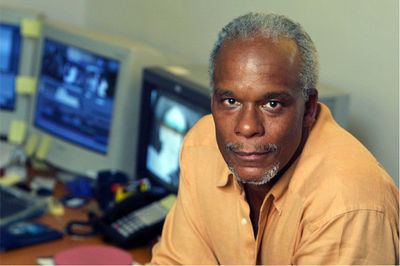
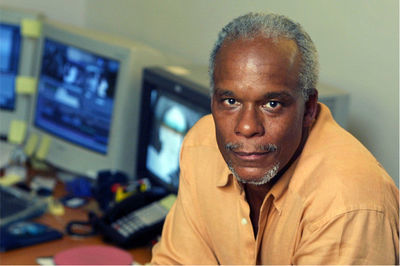
Stanley Nelson is one of this country’s most preeminent documentary
filmmakers. For over 15 years he has been chronicling various and diverse aspects
of black life and culture in America with films like “Marcus Darvey: Look for Me in the Whirlwind,” “Freedom Summer,” “Freedom Riders” and “A Place of Our Own,” but with his
own unique intimate personal insight which makes his film even more profound.
His latest work, the much anticipated “The Black Panthers: Vanguard of the Revolution,” details the remarkable rise and sudden fall of the
prominent black militant organization
that both inspired a whole new generation while at the same time terrifying the
establishment from the mid 1960s to the early ’70s. Their still lasting impact
is a fascinating story as well as cautionary tale about power, political and
social activism, and what happens when the powers that be, as well as internal strife,
come together to destroy a political force that was on the verge of creating
some real change in this country.
Last week, I had the opportunity to talk to Nelson about his
film, the forces that bought the Panthers into being and how they would
compare with more recent political activism efforts such as the Black Lives Matter movement.
You’re
of the generation that grew up with the Black Panthers. Did you have any
personal involvement with them?
Well, I grew up in New York City, so when the Panthers came
into being, I was 15 or so. I never joined the Panthers, but I was very intrigued
by them. I liked their look and their rhetoric, and they were talking about
issues that were of concern for us in the North, so I was very, very, very
intrigued by the Panthers. In fact, when I was in high school, a friend and I
walked over to the Panthers headquarters and we wanted to see what was going on and
we looked around and said “Nah, I don’t think we want to join yet”
(Laughs).
Well
you just said something that you make an important point in your film that the
Panthers were very much a Northern, urban movement unlike the Civil Rights
movement that was very much a Southern “thing,” though it impacted
the entire country. And, at the time, attitudes were changing. Established civil
right groups, such as SNCC and the SCLC, were seen as antiquated, basically
begging white people to help us while the Panthers were more in your face and
aggressive saying: “Hey you don’t give us what’s rightfully ours we’re
going to take it”
Right exactly, I think that’s very astute of you. That was
definitely one of the ways in which we saw it. And you have to remember that I
was 15 when they started the whole Panthers imagery and we were their target
age. That’s how we saw it as young people. My parents at the time didn’t see it
the same way. My parents saw them as “Who in the hell are these guys?” (laughs)
But for us, as young people, we were really galvanized by the Panthers.

And
there was also the visual aspect of them as you also point out in your film.
The way they dressed with the black leather coats, black pants, black berets and the shades. For lack
of a better word, there was something definitely “sexy’ about them.
Oh yeah they were sexy, they were sexy all right. That’s
the right word. And that was another big attraction for us as young people, but
for the media as well. And you have to understand too that we had never seen
black people with this kind of attitude before, not on TV, not in the movies,
not even in real life. Kind of giving the finger to the white man’s face. That
was not Martin Luther King. This was something very, very different. One of the
things that has lasted about the Panthers is that attitude. I don’t think there
could be hip-hop without the Panthers. It’s a very hip-hop attitude.
To put
this into the framework of movies, it’s like younger people don’t understand
when I tell them what an enormous impact those “Blaxploitation” films during
the ’70s had on me. They don’t get it. It’s the same finger in the white man’s
face attitude. We didn’t want to see Sidney Poitier being all nice and
acquiescent to the white man like that
line he says in “No Way Out”: “I can’t let that man die because he hates me.” We wanted to see Jim Brown kicking the ass of racist white villains and
cheering him on.
Yeah and that was that new attitude that was coming. But
remember we were coming off an era when just a few years earlier you barely saw
any black people at all on TV in any capacity and it’s very hard for younger
people who weren’t around at that time to understand that. There were no black
people on TV.

I’ll
bet the same thing happened in your family that when you were watching a TV
show as a kid and a black person appeared, even just an extra walking in the
background, you called out for everyone in the house to hurry down to watch him
before he disappeared. Most of time they got there too late. “Aww, gee you
missed him. He was right there!”
Yeah right! (laughs) Well you know there have been studies
about that all you have to do is to have a black person in the background as an
extra and that’s what we see, that’s what we notice. For most shows, you never
even saw that. Occasionally you would get a black actor in a guest starring
role on a TV episode or if you saw a black entertainer performing some on
variety show like James Brown or Diana Ross on the Ed Sullivan Show. So those
were the times we were coming out of when the Panthers or these black films of
the period came to be. It’s easier to understand the phenomena that were the
Black Panthers, the milieu that we were living in at that time.
I find
one of the great things about your documentary is that you’re very honest as well.
You deal with J. Edgar Hoover’s and the FBI’s COINTELPRO program
to destroy the Panthers and other black radical and civil rights organizations.
But at the same time, the internal conflicts and egos among the founders and leaders
of the group also hastened their demise. You don’t present an over-romanticized
view of the group. If you have people you’re going to have egos and if you have
egos you’re going to have problems
Well, how do you tell a story? You tell it by being honest.
(laughs) It makes a story that much better and that much deeper. I admit as a
filmmaker, it makes it very more complicated, but it still makes it better.

Now
that the film is completed and you have had time to reflect on it, have you wondered
where the Panthers could have gone if Hoover’s plan to destroy had failed and
if those running it hadn’t clashed with each other over petty differences and
worked together?
No that’s total speculation and it’s hard to say. I think
if the FBI hadn’t had been involved and there were no internal conflicts and probably
if you removed Huey (Newton) and Eldridge (Cleaver), you still had a huge component of very
committed African-American people, so who knows what could have happened? What could have come out of that?
But I think the thing that is really interesting is that
they came up right before drugs invaded that African American community. So in
1966, 67, 68, in the African American community, you didn’t have this influx of
heavy drugs that came later on. You had all these people who had all this young
energy of youth and you also had the Vietnam war looming over their heads as well, so they were pushing for change. Six,
seven years down the line, the war is over and drugs have inflected the black community.
I’ve
talked to one or two women friends who have seen your film and, even though you
do address it, they felt that you not give enough attention to the misogyny and
sexism inside the Panthers. And let me add that it wasn’t just the Panthers. Other
civil rights groups such as The NAACP, SNCC, SCLC for example also had their
own major problems with sexism at the time as well but people like point to the
Panthers.
I think that we accurately portray what was going on in the
Party at that point. Our film covers the years from 1966 to 1973 and interviewing
the women who we talked to here was nothing that we kept out of the film. I
think some really terrible things happened after that point and I’m sure that
some really terrible things happened before that point, but that’s not what we
got from the women that we interviewed.
And actually I was at a screening of just some scenes from
the film very early on and this young African -American feminist got up and said the same thing about misogyny and horrible things that were done to women and 3
or 4 of the Panther women who were at the screening shouted her down. They told
her that those were not their experiences. So
when you have Panther alumni at Panther screenings and conventions, you find a
lot of women there. You find a lot of women who were involved and proud about
their participation in the Party. Yes it existed, but that’s not what we found
and my feeling is that a lot of those stories people may be hearing happened
after 1973 when the Party was slowly deteriorating. It was a very different
thing.

A
friend of mine and I were comparing the Black Panthers with the current Black
Lives Matters movement and we didn’t see much of a similarity. The Panthers
were an organized group with clearly defined leaders and officers with a
clearly defined set of goals they were pursuing. BLM seems to me too diffuse; no one really knows who really runs it
and to me it looks more like an easy “hashtag” armchair protest: “I tweeted something, now I can go back to my video games” What do you say about that?
Well, my understanding is that one of the things with the
Black Lives Matter movement is that this is purposeful, that they do not have a
real head. That this is one of the ways that they are trying to go about this movement,
not to have a clear leader that other movements have had, for better or worse.
Who knows if that’s going to work or not? We’ll see. It’s an experiment to see if they can operate without this
hierarchy.
But I think the problem is that as your media attention
needs increase, then you’re going to have to have people who will speak for the
movement and then those people become the leaders whether they want to or not.
They become identified to the public as leaders and that’s hard to avoid.
Finally, have younger people who have seen the film expressed to you that they feel they
have missed something – that furor of the times, that sort of energy, that
commitment and wish that they could bring that back today? I say that because until
recently, it seems to me that younger generations tended to be more politically apathetic
Oh yeah I get that feeling all the time, How do we take
this and bottle it and use it? But I think the thing to think about though
is that the Black Panthers did not come out of a vacuum. They rose out of the traditional civil rights
movement. They rose of the anti-Vietnam War movement. The anti-war movement is central to this
whole narrative. Back then you were in a
space where any man in this country of draft age could be snatched up and taken
into the jungle given a gun and told to fight. So that politicized everybody.
It made everybody think how do I change this, whether you were for the war or
against it. You couldn’t ignore it. It
was literally a life or death situation.
But right now, I think it’s a tragic time with all these horrible
deaths, but also it’s a positive time seeing so many young people organizing and
pushing for change and in a larger way and a more vocal way than there were
even just two years ago. And we’re even seeing race being discussed in a way
that it wasn’t just a few years ago. We’re talking about things. We’re talking about
this country and what does it stand for?
“The Black Panthers: Vanguard of the Revolution” opens Sept 2
at the Film Forum in New York City and continues opening in other cities across
the country throughout the rest of September and October. with a PBS broadcast
premiere scheduled for sometime in 2016.
Source:: http://www.rogerebert.com/interviews/hip-hop-attitude-stanley-nelson-on-vanguard-of-the-revolution


